
A New Era for Indian Investors
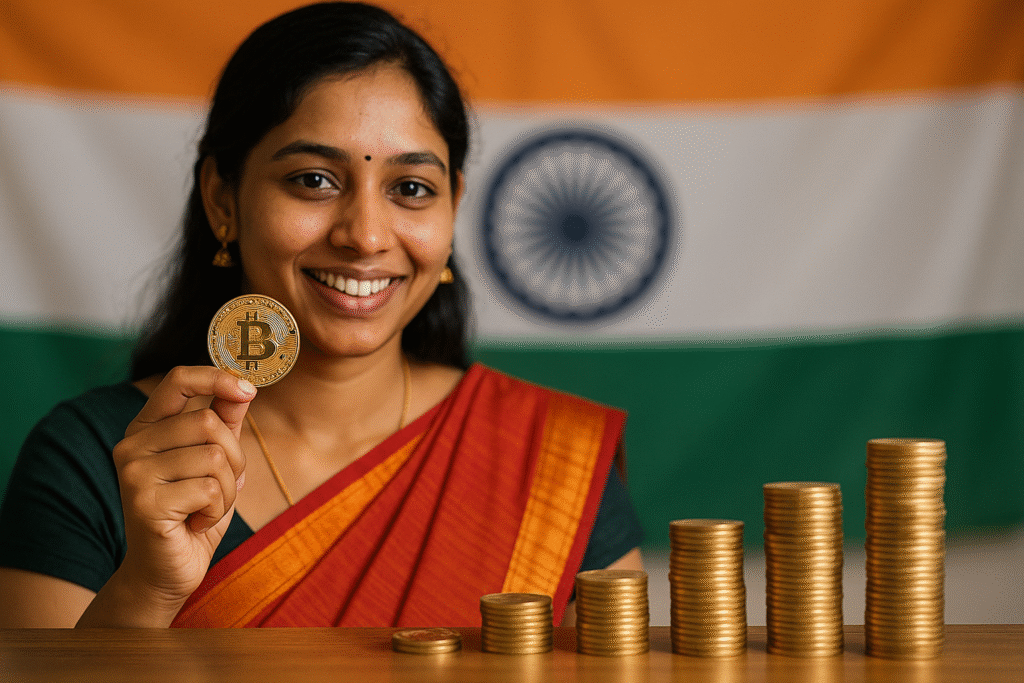
For the third year in a row, India has secured the top position in the Global Crypto Adoption Index. This achievement signals a profound shift in how Indians are engaging with digital finance. Whether it’s Bitcoin investments by small-town traders or blockchain-powered startups in major cities, the country has firmly established itself as the global leader in grassroots crypto adoption.
But what does this really mean for the average investor, professional, or entrepreneur? Let’s dive deep into the story of India’s rise as the world’s biggest hub for cryptocurrency adoption.
Background: The Road to Leadership in Crypto Adoption
India’s crypto journey has been anything but smooth. From regulatory uncertainties to RBI restrictions, the path was filled with challenges. Yet, the resilience of Indian investors and innovators has pushed the nation to the top.
Some key milestones include:
- The Supreme Court lifting the RBI banking ban on crypto exchanges in 2020.
- Rapid rise of exchanges like WazirX, CoinDCX, and ZebPay.
- Increased awareness about blockchain beyond just Bitcoin trading.
These factors laid the foundation for India’s remarkable run at the top of the Crypto Adoption Index.
Why India Leads the Crypto Adoption Index
1. Grassroots Participation
Unlike some countries where crypto is dominated by big institutions, India’s adoption is powered by everyday people. College students, freelancers, small business owners, and even farmers are exploring crypto as an alternative investment.
2. Low-Cost Investments
Indian exchanges allow investments starting as low as ₹100. This micro-investment opportunity makes crypto accessible to everyone.
3. Rising Entrepreneurial Ecosystem
India’s startup culture has embraced blockchain technology. From supply chain tracking to NFT marketplaces, Indian entrepreneurs are building solutions that are now recognized globally.
4. Remittances and Cross-Border Payments
India is the largest recipient of remittances in the world. Crypto provides a faster, cheaper way to receive money from abroad compared to traditional banking.
(For more crypto insights and updates, check out Top Crypto Website.)
Real-Life Examples of Crypto in India
Example 1: College Students Investing in Bitcoin
In smaller towns like Indore and Lucknow, students are learning about crypto through YouTube channels and Telegram groups. They see Bitcoin not just as an investment but as financial independence.
Example 2: Farmers Using Blockchain
Farmers in Maharashtra have started experimenting with blockchain-based supply chain platforms. These platforms ensure fair pricing and transparency.
Example 3: NFT Artists
Indian digital artists are finding global buyers for their NFT artwork, thanks to platforms like OpenSea and Rarible.
(Explore more stories of innovation at Wordo Photographer Blog.)
Case Study: India’s Crypto Exchange Growth
Exchanges like WazirX, CoinDCX, and Bitbns have grown from small startups into billion-dollar businesses. Their user-friendly apps and localized features, like UPI deposits, have accelerated adoption. Despite tax regulations, trading volumes remain strong, proving India’s long-term commitment to digital assets.
(For more deep dives into crypto adoption trends, see The Host Judge.)
The Global Impact of India’s Leadership
India’s dominance in the Crypto Adoption Index has set a global benchmark. Other developing countries are now looking at India’s model of mass participation and low-barrier entry. This could redefine how the future of global finance is shaped.
(Check out related articles like Eric Trump of Crypto’s Greatest.)
FAQs on India and the Crypto Adoption Index
1. What is the Crypto Adoption Index?
The Crypto Adoption Index is a ranking system that measures how widely cryptocurrencies are used at the grassroots level across different countries.
2. Why does India rank at the top?
India ranks highest due to its massive population, grassroots participation, and affordability of investments.
3. Is crypto legal in India?
Yes, trading crypto is legal, but it is regulated under taxation laws. Investors are required to pay a 30% tax on gains.
4. How are beginners in India investing in crypto?
Beginners often start with mobile apps, investing small amounts like ₹100–₹500 to learn the basics of Bitcoin and Ethereum.
5. What risks do Indian investors face?
The main risks are price volatility, unclear regulations, and the possibility of scams. Investors should use trusted exchanges.
6. What role do entrepreneurs play in India’s crypto boom?
Entrepreneurs are building blockchain startups, DeFi projects, NFT marketplaces, and even gaming ecosystems powered by crypto.
7. How can Indians use crypto for international payments?
Crypto allows faster, cheaper cross-border transactions compared to banks, making it highly useful for freelancers and families receiving remittances.
Conclusion: India’s Crypto Future
India topping the Global Crypto Adoption Index for three consecutive years is not just a statistic—it’s a revolution in motion. From small-town investors to global entrepreneurs, the country has embraced digital assets like no other.
The road ahead will include regulatory hurdles, technological advancements, and even more innovative use cases. But one thing is certain: India will remain at the heart of the global crypto movement.
Ready to stay ahead in crypto? Explore more insightful articles, guides, and news at Top Crypto Website. For photography lovers, check out Wordo Photographer Blog, and for web hosting insights, visit The Host Judge.







Thank you for your sharing. I am worried that I lack creative ideas. It is your article that makes me full of hope. Thank you. But, I have a question, can you help me?
Your point of view caught my eye and was very interesting. Thanks. I have a question for you.
Your article helped me a lot, is there any more related content? Thanks!
Your article helped me a lot, is there any more related content? Thanks!
I don’t think the title of your article matches the content lol. Just kidding, mainly because I had some doubts after reading the article.